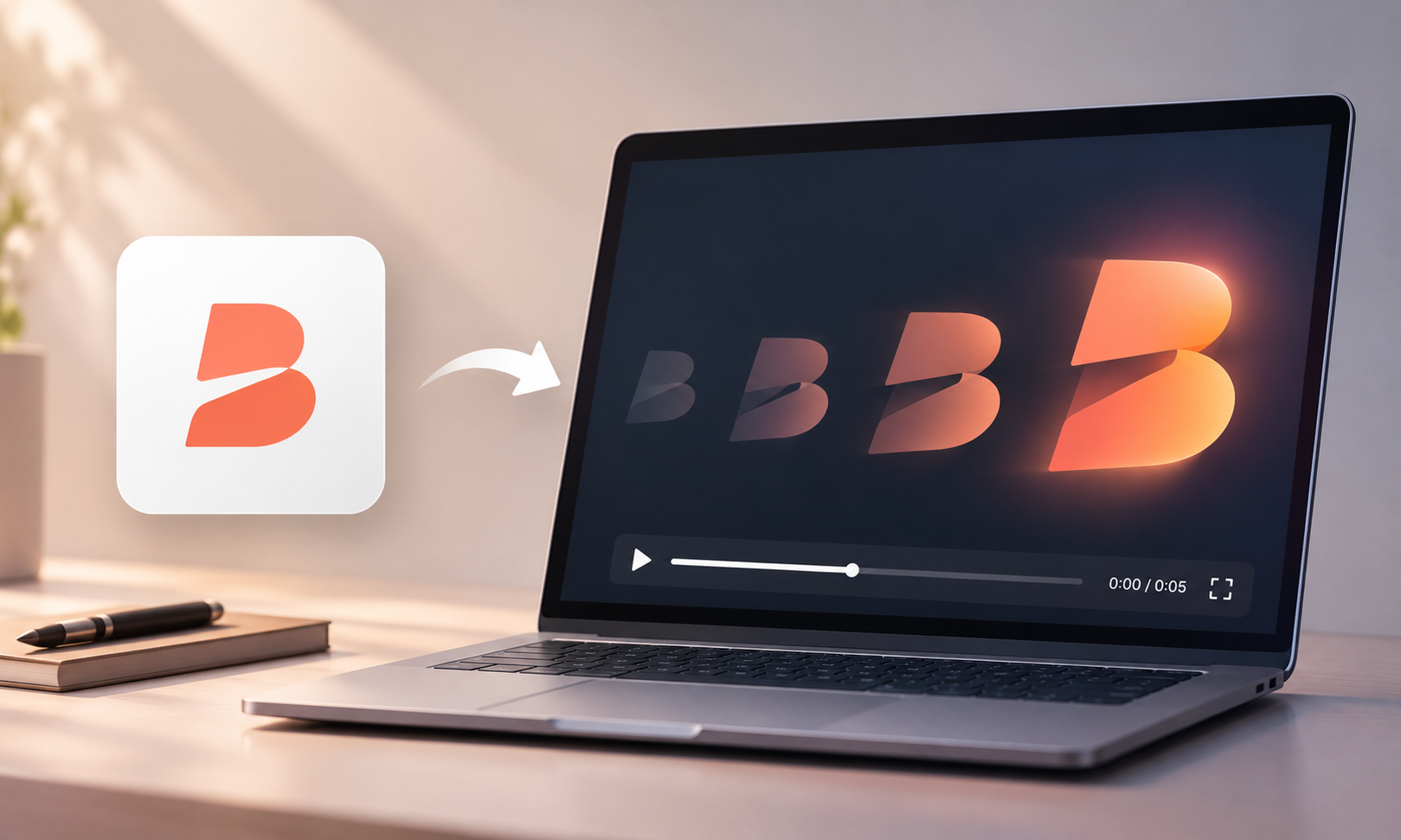
What Is Logo Animation?
The idea behind logo animation is to make a brand’s logo aesthetically more pleasing.
The task includes transforming a static or plain logo design into a vibrant, dynamic visual element using motion graphics and animation techniques.
Why Static Logos Are No Longer Enough
There was indeed a time when logos resided only on corporate stationery, such as business cards, letterheads, and envelopes, as well as marketing collateral, including brochures, product catalogues, and direct mailers. However, with evolving marketplace dynamics and the changing needs of new-age media platforms, a plain static logo is no longer sufficient to create the desired impression and impact. This shift has also encouraged many branding agencies in Mumbai to rethink how brands use motion to create a distinctive and lasting identity across digital platforms.
To be specific, static logos have the following limitations:
The most notable drawback is the lack of adaptability across multiple platforms and communication channels. Well, can a logo designed exclusively for a printed brochure deliver the same visual impact, clarity, and functionality when applied to app icons, smartwatch alerts, social media avatars, product packaging, and large-scale building facades? Not necessarily.
Static logos, being bland and plain, fail to convey any emotional flavour or shade after the first viewing
Static logos don’t find ready acceptance with social media channels, which are heavily inclined toward motion/video
How Logo Animation Strengthens Brand Identity
In the digital marketing age where every second of customer engagement is crucial, logo animation helps strengthen brand identity in many interesting ways:
The human mind relates more effortlessly to motion or movement. Brand recall is easier with an animated logo in comparison with a static, flat graphic
Animated logos leverage facets such as pacing, lighting, and movement style to showcase the brand personality
Motion grabs eyeballs while depth triggers curiosity and interest, resulting in greater brand engagement
Engagement is the key to higher sales and revenue. For instance, a slick, polished 3d logo animation conveys the message that the company is serious about quality, which can influence buying decisions at the subconscious level
Animated logos capture attention easily in fast-scrolling social feeds
A digital brand experience can become immersive and intuitive through the use of animated transitions, feedback, and micro-interactions
Types of Logo Animation
The following are the most popular types of logo animation in use today:
Morph and Shape Transformation: A geometric shape, such as a circle, becomes the symbol. Or a simple letter manifests into a splendid icon.
It is best suited for brands where evolution or a direct link between two concepts is the core idea.
Kinetic Typography: Letterforms in motion – stretching, bouncing, and self-assembling – do the work here.
It is best suited for brands where text or wordmarks occupy centre stage in the identity.
Also Read: How Typography in Branding Influences Brand Perception
Reveal and Build: The logo assembles itself from distinctive individual components: pieces slide in, move inside, and lock in place.
It is best suited for engineering and industrial brands that wish to convey precision, reliability, and a sense of transformation.
Character & Mascot Motion: It makes the overall logo experience more playful and engaging by adding a human or animal creature personality, such as rolling eyes, clapping hands, nodding heads, etc.
It is best suited for brands whose identity is anchored in a mascot.
Looping Animations: As the name suggests, such a type of logo animation comprises the end element looping back to the starting element in a continual, unabated motion.
It is best suited for brands that run digital ads as well as website banners.
Logo Animation Examples from Leading Brands
Amazon: Comprises an animation where the iconic curved "smile" arrow draws itself from the letter 'a' to 'z', sublimely underscoring the fact that it delivers everything from A to Z.
Coca-Cola: Seamlessly brings together abstract bottles of its classic varieties inside its iconic red disc, conveying the brand’s global presence and popularity.
Master Card: Employs fluid geometric motion to merge and overlap its iconic red and yellow circles, conveying a feel of total connection and dependability.
FAQs
What is logo animation?
It is about transforming a static logo design into a dynamic visual element using motion graphics and animation techniques.
What is the difference between an animated logo and a kinetic logo?
An animated logo has a motion sequence at its core, whereas a kinetic logo is a systemic brand identity that changes states based on context.
What is a motion graphics logo?
A static brand logo enlivened using animation, timing, and sometimes sound.
Why should a business animate its logo?
To strengthen brand connection and recall and enhance brand engagement, eventually driving sales and revenue.
Does an animated logo improve brand recall?
Yes, indeed.
When should a company animate its logo?
Ideally, a company should animate its logo when it would be frequently seen in interactive and motion-heavy media.