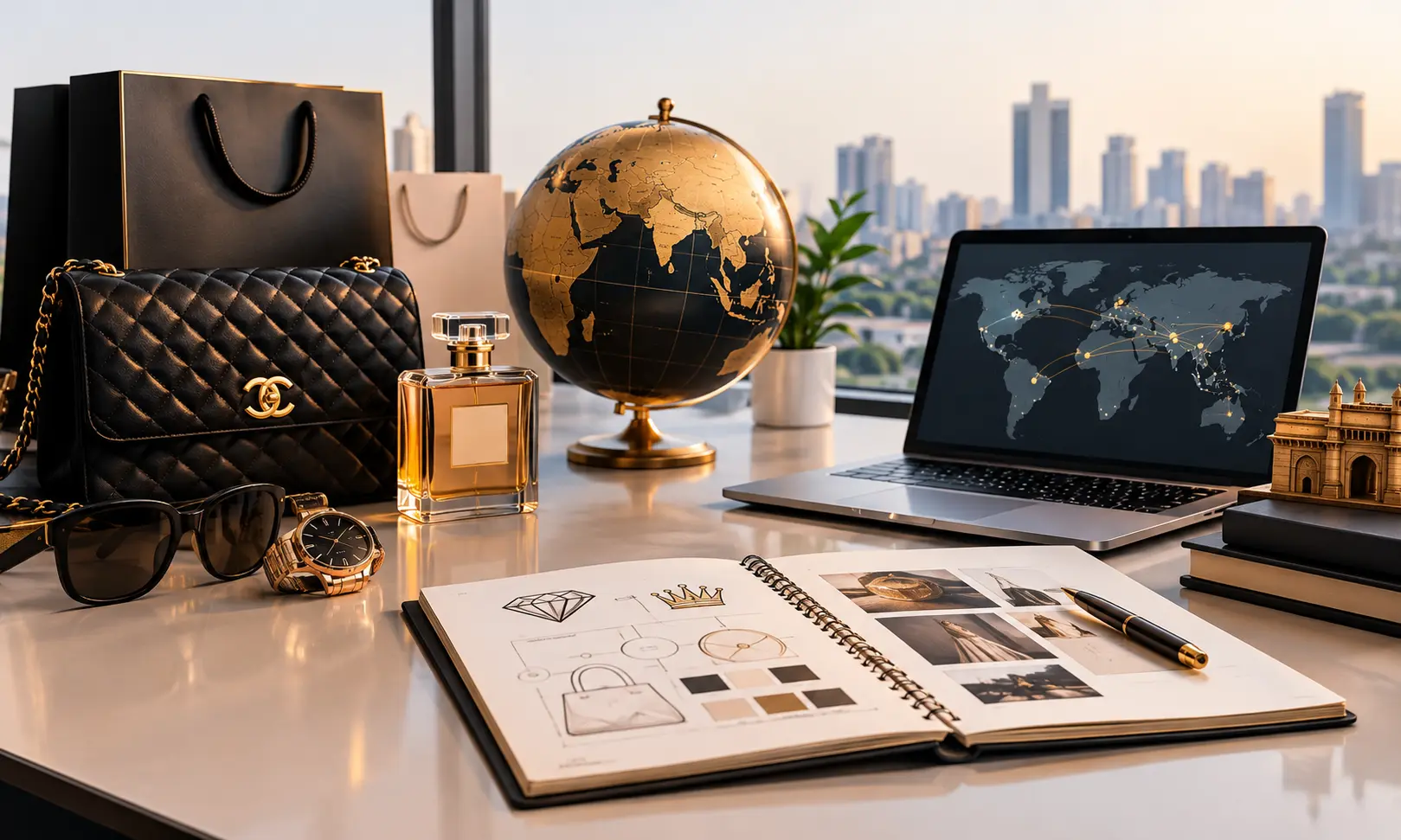
Luxury Brand Management is the process of building, nurturing, elevating, and safeguarding the image and credibility of premium businesses, while ensuring that pride, privilege, and exclusivity are evident at every customer touchpoint.
For both the growing class of new wealth and the traditionally elite, luxury brands form an inseparable part of an aspirational lifestyle. Owning a Mercedes-Benz, wearing a Rolex, vacationing at a Belmond retreat, or slipping on a pair of Louis Vuitton sneakers each of these purchases represents far more than the product itself. Together, they epitomise quality, heritage, elegance, and sophistication, with a Branding agency in Mumbai helping luxury brands communicate these qualities.
How Does Luxury Brand Management Differ from Regular Brand Management?
Flying business class on British Airways, wearing an Armani jacket, or staying at a Hilton property is not an everyday experience for most consumers. These are privileged moments, reserved for a smaller audience that values quality, enjoys a sense of distinction, and is drawn to the aura these brands project.
Unlike regular brands, which are built primarily around utility and cater to a mass audience, luxury brands are fundamentally about making a style statement. They are designed to be noticed and admired for their premium look, feel, and craftsmanship.
The key points of distinction between Luxury Brand Management and Regular Brand Management include:
Luxury Brand Management prioritises excellence in the creation and presentation of goods and services, whereas Regular Brand Management is more concerned with optimising pricing and communicating utility value.
Luxury Brand Management focuses on creating desire, evoking rarity, and conveying sophistication, rather than driving short-term sales volume.
Luxury Brand Management is built around high-net-worth individuals (HNIs), whereas Regular Brand Management targets cost-conscious consumers who prioritise utility over exclusivity.
Luxury Brand Management draws its strength from brand belief and social standing, whereas Regular Brand Management is largely shaped by product features and everyday functional use.
Key Strategies for Building Luxury Global Brands in India
India, and Asia more broadly, is rapidly emerging as a key battleground for the world’s leading luxury brands. Across categories such as fine jewellery, premium watches, designer fashion, accessories, and high-end technology, global luxury players are courting India’s affluent consumers with highly personalized, story-driven campaigns.
According to Ken Research, India’s luxury market is currently valued at approximately USD 10.6 billion to USD 17 billion, and growing at a CAGR of 6% to 13%. At this pace, the market is projected to reach USD 33 billion by the early 2030s.
Building a successful global luxury brand in India typically rests on the following strategic pillars:
Lean into Heritage — Anchor the brand in India’s rich cultural legacy, drawing on centuries of tradition, craftsmanship, art, and architecture. Brands that authentically reflect this heritage rather than borrowing it superficially tend to build a far deeper connection with Indian luxury consumers.
Build a Distinctive Niche Image — Invest first in building a culturally resonant, clearly defined brand identity, rather than chasing rapid expansion or short-term sales growth.
Bring Finesse to Packaging — As the saying goes, the first impression is often the lasting one. A thoughtful, artistic approach to finishing and packaging using premium materials and personalized, white-glove delivery rather than standard courier service reinforces a brand’s premium positioning at every unboxing moment.
Favour Privileged Promotions — Rather than pursuing mass marketing and broad media coverage, successful luxury brands in India often rely on invite-only previews and exclusive settings private salons, studios, boutiques, and galleries to create a genuine sense of exclusivity.
The Luxury Brand Management Process: Luxury Brand Management involves considerably more than selling high-ticket premium goods. In the Indian context especially, it requires a careful blend of business acumen, heritage-led brand anchoring, deep consumer psychology, and design choices bold enough to genuinely resonate with a discerning audience.
The process typically involves:
Defining the Brand DNA — Building the brand essence by thoughtfully weaving elements of Indian heritage into the brand’s core identity.
Creating the Brand Personality — Shaping a brand personality rooted in authentically Indian values, traits, and cultural sentiment.
Controlling Visibility — Deliberately limiting awareness and exposure to preserve a sense of scarcity and exclusivity, akin to a limited-edition release.
Premium Positioning — Moving beyond a conventional features-and-benefits pitch to instead draw on rich cultural context that underscores the brand’s uniqueness.
Curating Experiences — Delivering hyper-personalised experiences, both in-store and digital, that make each interaction feel distinctive and culturally meaningful, deepening customer loyalty over time.
Common Challenges in Luxury Brand Management
Building and sustaining a luxury brand carries a distinct set of challenges, including:
Striking the right balance between maintaining rarity and ensuring adequate accessibility
Preserving a sense of exclusivity in an era when digital media exposes every brand to a much wider, more public audience
Adopting new technology in packaging, marketing, and promotion without diluting the brand’s heritage value and cultural edge
Appealing to a younger, digitally native audience while continuing to serve loyal, long-standing patrons
FAQs
What is Luxury Brand Management?
It is the strategic and creative process of building and nurturing a high-profile brand image for premium, high-priced products.
How Does Luxury Brand Management Differ from Regular Brand Management?
The key difference is that Luxury Brand Management focuses on enduring quality and rarity, often integrated with cultural and heritage symbolism, whereas Regular Brand Management focuses on affordability, utility, and broad availability.
Why is India an important market for global luxury brands?
The rise of a new generation of wealthy Indian consumers, supported by rapidly growing disposable incomes, has made India an increasingly important market for global luxury brands.
What are the key strategies for building a global luxury brand in India?
Anchor the brand in India’s rich cultural heritage
Build a culturally resonant, distinctive brand identity
Bring finesse to product finishing and packaging
Favour privileged, exclusive promotions over mass marketing
How does digital marketing support Luxury Brand Management?
By preserving a sense of exclusivity even in digital spaces, delivering hyper-personalised online experiences, and weaving elements of Indian heritage and tradition into digital storytelling.