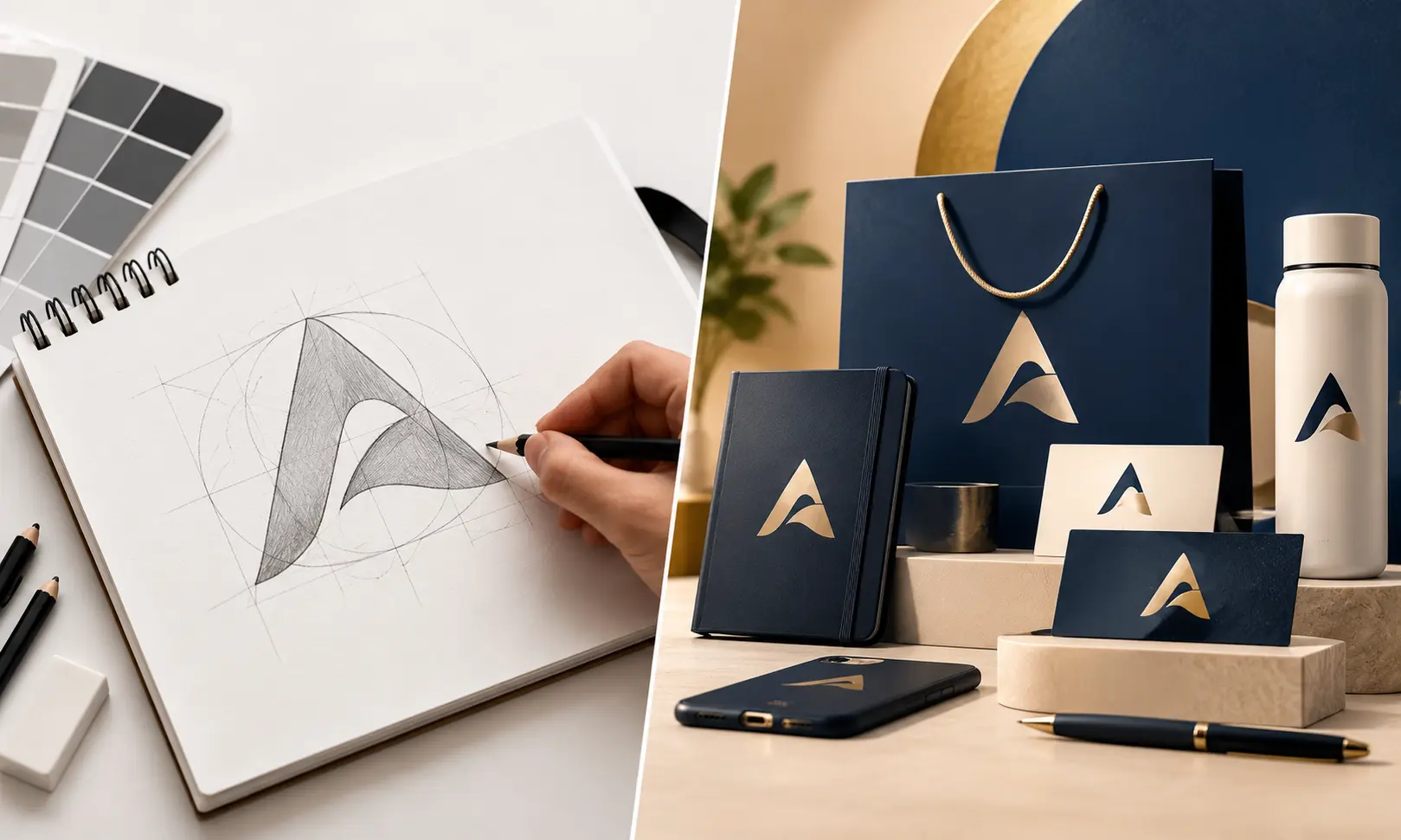
One of the biggest mistakes many companies make is to assume that when they get their logos made, they have completed their branding process. This is a reasonable assumption, given that the logo is the most visible aspect of a company’s branding. However, this is not entirely true. A logo by itself is not a brand.
Knowing the difference between logo and branding is one of the most valuable pieces of knowledge you can have as a business owner. It means you know how branding affects the way customers perceive and trust you. So, let’s take a deeper look into the logo design vs branding debate.
What is Logo Design?
Before we jump into logo design vs branding, let’s first understand each of these elements as individual entities. Your logo is a graphic representation of your business. It may be a text-based logo, an image-based logo, or a combination of the two. The process of designing a logo will require you to make decisions regarding typography, colour, icons, and layout.
Why logo design matters
When looking at the difference between logo and branding, a logo represents only the face of the brand, while branding includes all aspects of the individual behind the logo. A well-designed logo accomplishes three things:
Recognition: Your business can be easily recognised on all types of packaging, websites and within social media by having a consistent logo design.
First Impression: An organised and professional logo represents an organisation that has credibility and is serious about what it does.
Memorability: Humans use vision to process things faster, so having an attractive yet straightforward logo design helps to create a strong memory.
Types of Logo Design
In deciding the difference between logo and branding, let’s also briefly explore the different types of logo design.
Wordmark logo: It consists of a company’s name or initials in a stylised font. Famous examples are Google and Coco-Cola.
Letter mark logo: It is a type of logo that uses the company’s initials as part of the logo. Famous examples are HP or IBM.
Pictorial mark logo: This type uses an image or icon (either literal or abstract) as a representation of brand identity. Famous examples include Apple or Domino's.
Abstract mark logo: Logo design that uses abstract symbols or shapes, like Pepsi or Adidas.
Emblem logo: The type of logo design that combines text and image, creating a unified symbol. For example, Warner Bros. or NASA.
Mascot logo: This type uses the signature mascot or character of the company as the face of their brand. For example, Michelin or KFC.
What is Branding?
Now, while navigating the difference between logo and branding, let’s take a look at branding’s place in business. Your branding consists of your tone, messaging, customer interactions, your values, and the emotional connection built over time.
A business has multiple touchpoints, from customer interaction to how a packaging or product feels in one’s hands. If you make a half-hearted attempt at showcasing your vision and mission, your business is not making it far, no matter how good it looks on the outside.
Key elements of Branding
In the logo design vs branding debate, the quality of branding matters. Strong branding is built from multiple layers, each one playing an important role in shaping how your audience sees and connects with your business.
Brand voice: Brand voice is the personality of your business. Whether you sound formal or friendly, the brand voice should remain consistent across channels. Consistent brand voice builds reliability and authenticity.
Brand values: Your brand values are made up of your business’s core beliefs and principles. Clear values and an authentic brand identity attract the right audience, with whom you can make meaningful connections.
Customer experience: A positive and consistent customer experience keeps them coming back, turning them into loyal customers who will advocate for your business.
Visual Identity: Your business’s visual identity is its logo, colour palette, typography, imagery, and design style. Visual identity is what makes your brand instantly recognisable across packaging, social media, and your website.
Messaging: In the logo design vs branding debate, brand messaging is an important factor. Brand messaging includes a tagline, website copy, social media captions, and ad language.
Reputation: Reputation is built and nurtured through honest communication, quality service, and follow-through.
Logo Design vs Branding: What’s the Main Difference?
The main difference between logo and branding is simple. Your business is like a human body. The logo is the outward appearance; it’s the first thing everyone sees. It is important. But a person is more than just their appearance. There is life inside a human body.
Branding is the life of a business. It builds trust and creates an emotional connection with your audience. A logo, while just as important, only gets peoples’ attention. Branding keeps that attention long-term.
Logo Design vs Brand Identity: Are They the Same?
When trying to understand logo design vs brand identity, here’s the easiest way to understand it.
Your brand identity is a combination of all the specific visual marks you use to build the brand. This includes your logo, colour palette, typography, imagery style, packaging design, website and social media aesthetic and design style. Everything must be cohesive.
Why Businesses Need Both Logo Design and Branding
Logo design vs branding has been debated for a long time, and the takeaway is that both are very important elements of a business. Here’s what each one does for your business:
A logo attracts attention and creates a first impression
Branding builds trust over repeated interactions
Strong branding improves customer retention
A consistent brand identity supports long-term business growth.
Conclusion
The difference between logo and branding dictates how you build your business. If you know what you’re working with, your business can be successful. Your logo starts the journey. It gives your business a face and helps people recognize you. But branding creates lasting impact. It shapes perception, builds trust, turns first-time buyers into loyal customers, and opens your business up to growth.
Businesses need to invest in both. A great logo design should go hand-in-hand with a strong brand strategy. The businesses that do this will be the ones to grow consistently.
FAQs
1. What is the difference between a logo and branding?
The difference between a logo and branding is that a logo is a visual mark that identifies your business. Branding is the complete experience people have with your company. Think of your logo as one piece of a much bigger puzzle. Branding includes your values, business tone, customer experience, colours, and fonts.
2. Can a business grow with only a logo and no branding?
Growth can be difficult without branding. A logo can get you noticed, but branding is what keeps the customers returning for more. It builds trust and reliability. Without a clear brand, people have no emotional connection to your business; ergo, there is no reason to revisit. The difference between logo and branding matters here. A logo is just a name tag. Branding is your business’s reputation.
3. Why is logo design vs branding important for startups?
Startups often spend all their budget on a logo and ignore branding. Understanding logo design vs branding before you start this business venture helps founders invest in the right places. A startup with strong branding and a simple logo will outperform one with a fancy logo but no clear identity, message, or values.
4. Should branding come before logo design?
It is a good idea to put branding before logo design. Your brand strategy defines who you are in this vast market. It narrows down your audience. Branding helps you determine and showcase what your business stands for. When you understand logo design vs. brand identity, it becomes clear that the logo is only a reflection of your brand; it is only a face. It doesn’t define your brand. Branding is your foundation, and so you should always build your foundation first.
5. How does branding help a business stand out from competitors?
Branding gives your business a unique personality and point of view. When customers consistently see the same tone, values, and visual style, they begin to recognise and trust you. The difference between a logo and branding is the key here. Your brand identity is the full picture. Your logo is just a small part of that full picture, which makes you recognisable and different.
6. What are the main elements of brand identity besides a logo?
When you start exploring logo design vs brand identity, it becomes clear a logo is just a part of the bigger umbrella term “brand identity”. The key elements of brand identity include:
Brand colours, typography, and logo
Tone of voice
Brand messaging
Packaging and design templates
Customer experience
Brand values
These elements form a brand identity together, each element as important as the other.