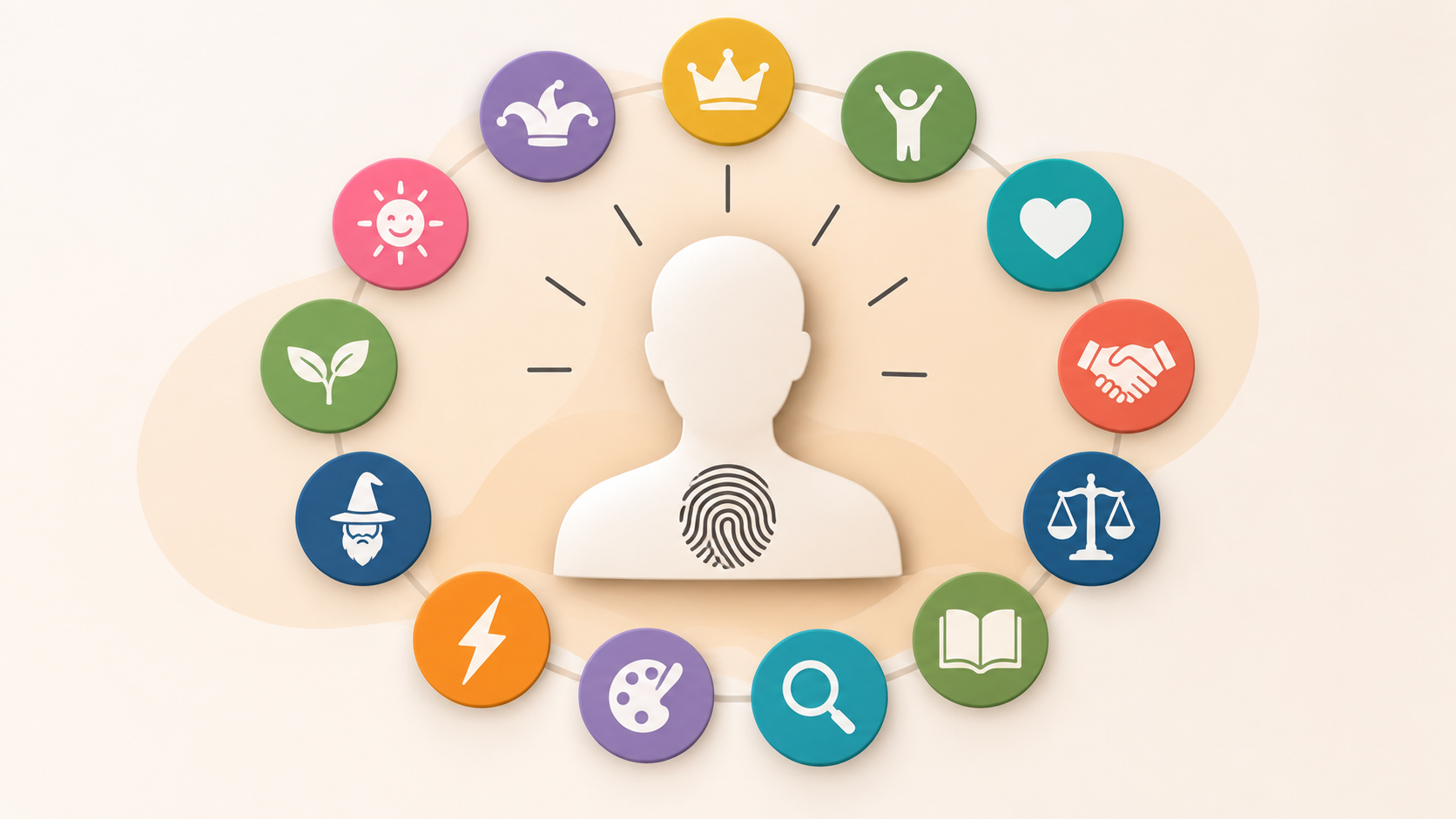
What Are Brand Archetypes?
"Products are made in the factory, but brands are created in the mind."
- Walter Landor
What a powerful statement, indeed!
The very purpose of branding is to occupy the mindspace of the audience and build enduring connections. In this context, it is paramount to understand the context of the brand archetype.
Brand archetypes are character models that reflect what drives people, what they desire, and what they value at their core. These are universal, psychological frameworks based on Carl Jung’s theory that make brands unique and memorable. That is why we just like some brands and wholeheartedly love some others.
Why Brand Archetypes Matter for Your Brand
What if a brand were a real, living person? How would they look, talk, and interact with others?
The idea behind a brand archetype is to humanise a faceless business and turn it into a relatable human personality. Only then will a brand be able to connect with customers at a deep emotional level and influence their buying behaviour and patterns.
The 12 Brand Archetypes Explained
1. The Creator
Driven by a clear vision, the Creator seeks to build an enduring product or deliver a memorable experience that manifests their vision.
Core Motivation: Innovation – If it can be imagined, it can be created.
Goal: Create the perfect product/service.
Traits: Inspirational, Original, Daring, Provocative.
Examples: Adobe, Apple, Lego.
2. The Sage
A seeker of knowledge and wisdom, the Sage is often a lifelong learner and thought leader. In fact, Sages make an excellent mentor.
Core Motivation: Understanding – The truth will set you free.
Goal: Find the truth.
Traits: Wisdom, Intelligence, Expertise, Influence.
Examples: BBC, PBS, Google, Philips.
3. The Caregiver
The Caregiver is driven by compassion and a deep-rooted, genuine desire to help others. Caregivers are usually found in noble and philanthropic professions, such as teaching, charity, and nursing.
Core Motivation: Service – Love your neighbour as yourself.
Goal: Helping others.
Traits: Caring, Empathetic, Warm, Reassuring.
Examples: UNICEF, WWF, Johnson & Johnson, Pampers.
4. The Innocent
The Innocent is an optimist who is driven by simplicity, good virtues, and honesty and looks to spread peace and happiness everywhere around.
Core Motivation: Safety – Life is simple, and simplicity is elegant.
Goal: Spread happiness and joy.
Traits: Optimistic, Charming, Honest, Loyal, Simplistic.
Examples: Dove Soap, Coca-Cola, McDonald’s, Volkswagen.
5. The Jester
The Jester is a jolly, happy-go-lucky type who wants to make people laugh and bring cheerfulness to all that they do. The Jester sees good in every situation.
Core Motivation: Pleasure – If you are not having fun, you are doing it wrong.
Goal: Entertainment.
Traits: Fun-loving, Playful, Optimistic, Cheerful.
Examples: Budweiser, Skittles, Old Spice, Dollar Shave Club.
6. The Magician
Highly imaginative and reassuring, the Magician is overwhelmed by the idea of ‘Making the impossible possible.’ Their work is inspired by the philosophy ‘Tomorrow is brighter than today, and all your dreams can come true if you believe.’
Core Motivation: Power – It can happen.
Goal: Magical Moments
Traits: Transformational, Charismatic, Imaginative, Idealistic, Insightful.
Examples: Disney, Dyson, Polaroid.
7. The Ruler
The Ruler is a dominant personality endowed with a strong sense of authority and leadership skills. Rulers are confident, proud of their expertise, and expect others to follow suit.
Core Motivation: Control – Power isn’t everything; it’s the only thing.
Goal: Success.
Traits: Power, Status, Success, Wealth, Loyalty.
Examples: Mercedes-Benz, Louis Vuitton, Rolls-Royce, Rolex, Microsoft.
8. The Hero
The Hero has a strong sense of morality and righteousness, works to make a difference, and seeks to overcome injustice and problems.
Core Motivation: Mastery – Where there’s a will, there is a way.
Goal: Help improve the world.
Traits: Courageous, Honourable, Strong, and Inspirational.
Examples: Nike, BMW, Duracell.
9. The Regular Guy aka Everyman
The Regular Guy is humble, down-to-earth, and easily accessible. Generalists by nature, Regular Guys seek to create deep connections and desire to be liked by all.
Core Motivation: Belonging - You are just like me and I’m just like you.
Goal: Connect with others.
Traits: Friendly, Humble, Relatable, Genuine.
Examples: IKEA, Target, Lynx
10. The Outlaw aka Rebel
The Outlaw is essentially a non-conformist who is driven by rebellion bordering on aggression.
Core Motivation: Revolution – Rules are meant to be broken.
Goal: Question the status quo; fight authority.
Traits: Rebellious, Trailblazer, Bold, Unconventional.
Examples: Harley-Davidson, Diesel, Virgin.
11. The Explorer
Driven by freedom and independence, the Explorer is inquisitive by nature and seeks to discover amazing things and showcase them to the world.
Core Motivation: Freedom – Don’t fence me in.
Goal: Excitement and fulfilment.
Traits: Discovery, Adventure, Independence, Exploration.
Examples: NASA, Jeep, National Geographic, The North Face.
12. The Lover
The Lover is passionate, sensual, and driven by desire. Lovers wish to become physically and emotionally enchanting to their audience.
Core Motivation: Intimacy – I only have eyes for you.
Goal: Love makes the world go round.
Traits: Sensual, Romantic, Soothing, Empathetic.
Examples: Chanel, Alfa Romeo, Victoria’s Secret, Godiva.
How Does Brand Harvest Help Define Brand Personality?
As a renowned branding company in Mumbai with a huge repertoire of clients across industry sectors, we at Brand Harvest follow a proven strategic process to define brand personality.
In its simplified form, this exercise comprises the following steps:
Understand Your Audience
Review and Revive Core Values, Mission, and Market Positioning
Decide Personality Dimensions and Conclude on Primary and Secondary Archetypes
Define Brand Tone and Voice
Create a Brand Manual
FAQs
What are brand archetypes?
They are character models that reflect what drives people, what they desire, and what they value at their core.
How many brand archetypes are there?
There are twelve (12) brand archetypes.
What are the 12 brand archetypes?
Creator, Sage, Caregiver, Innocent, Jester, Magician, Ruler, Hero, Everyman (aka Regular Guy), Rebel (aka Outlaw), Explorer, and Lover
How do I find my brand archetype?
First, understand your brand’s values, personality, purpose, and the emotions you want people to associate with it. Then map these findings with the 12 classical brand archetypes and see which one best reflects your brand’s identity.
Can a brand have more than one archetype?
Yes, it is possible for a brand to have multiple archetypes – a primary archetype and one or two secondary archetypes.